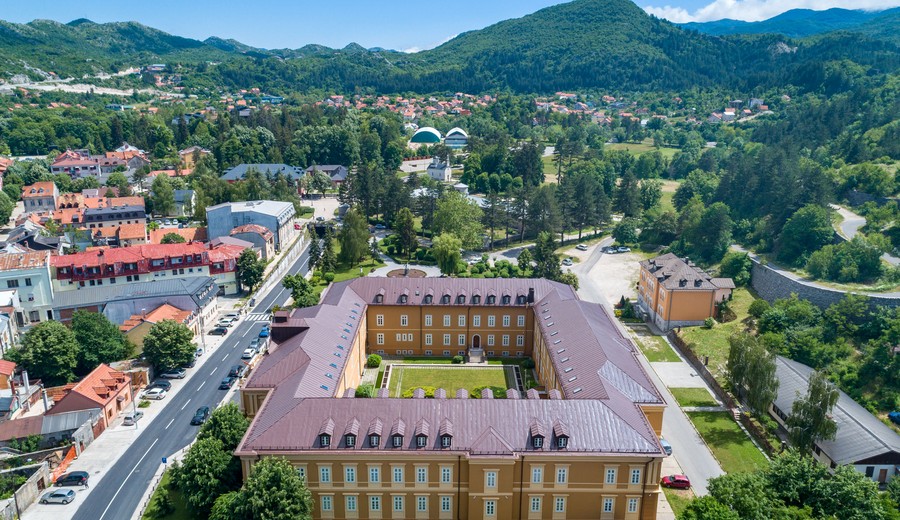
National Park Lovćen – Where Montenegro Begins
Rising between the Adriatic coast and the Montenegrin interior, National Park Lovćen is more than a protected natural area. It is a place of origins — geographical, historical, and emotional — where Montenegro’s landscape, identity, and spirit first take shape.
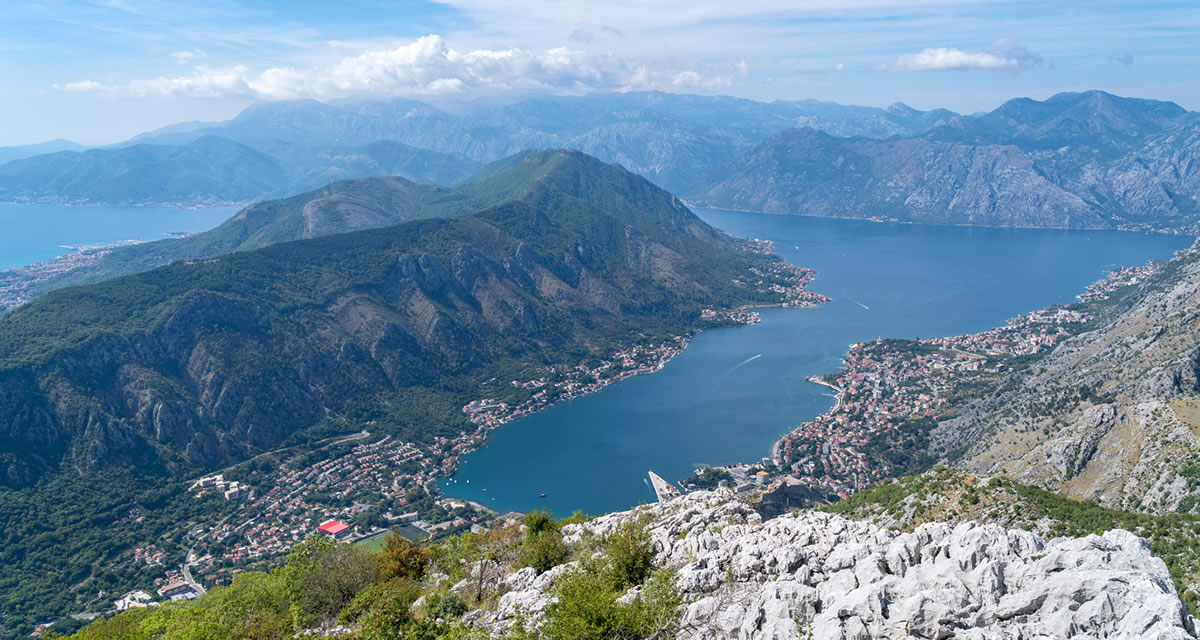
From the moment the road climbs above the Bay of Kotor and enters the high mountain plateau, the atmosphere changes. The air becomes sharper, the views wider, and time seems to slow. Lovćen is not dramatic in the way of towering peaks, but powerful in its presence — a mountain that does not overwhelm, but defines.
A Mountain Between Two Worlds
Lovćen stands as a natural bridge between the sea and the continent. To one side lie the shimmering waters of the Adriatic and the Bay of Kotor; to the other, the karst plains, rivers, and lakes of central Montenegro. This position has shaped centuries of movement, trade, defense, and culture, making Lovćen a silent witness to the country’s history.
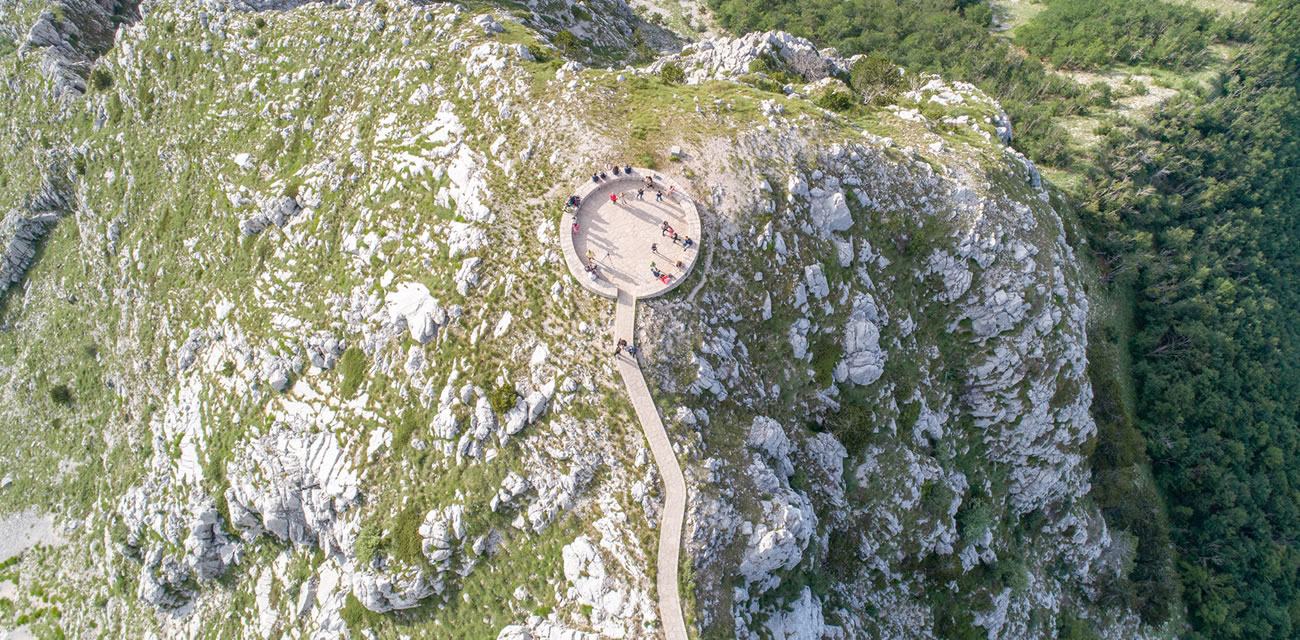
The park is characterized by rocky ridges, mountain meadows, forests, and traditional stone villages scattered across the plateau. In spring and summer, wildflowers cover the fields; in autumn, the forests glow in warm tones; in winter, snow often brings a quiet, almost monastic calm.
Njegoš and the Symbol of Lovćen
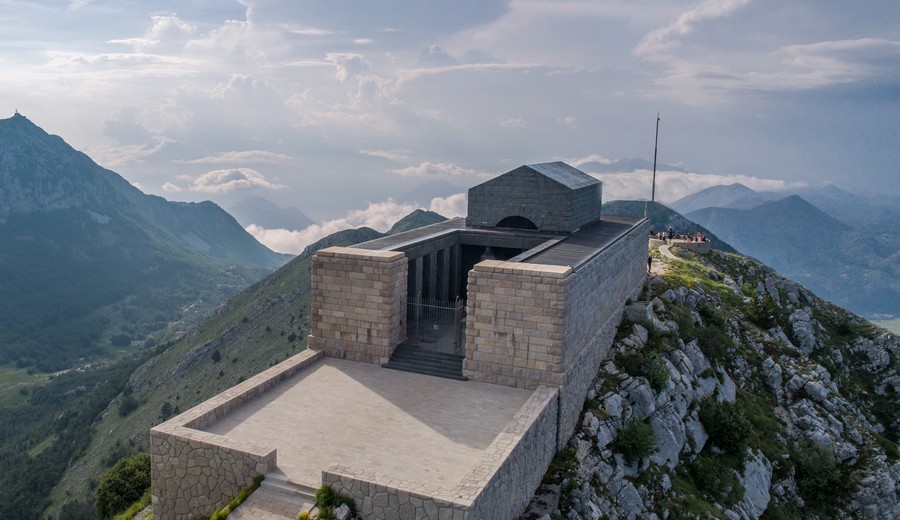
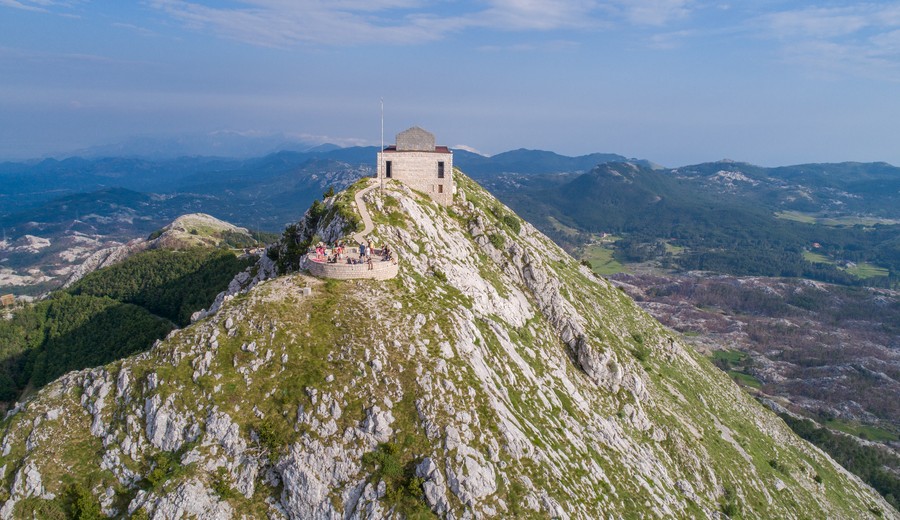
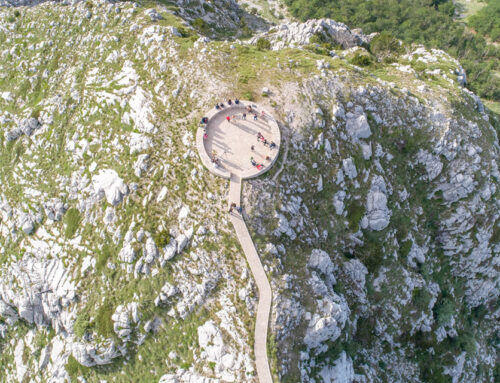
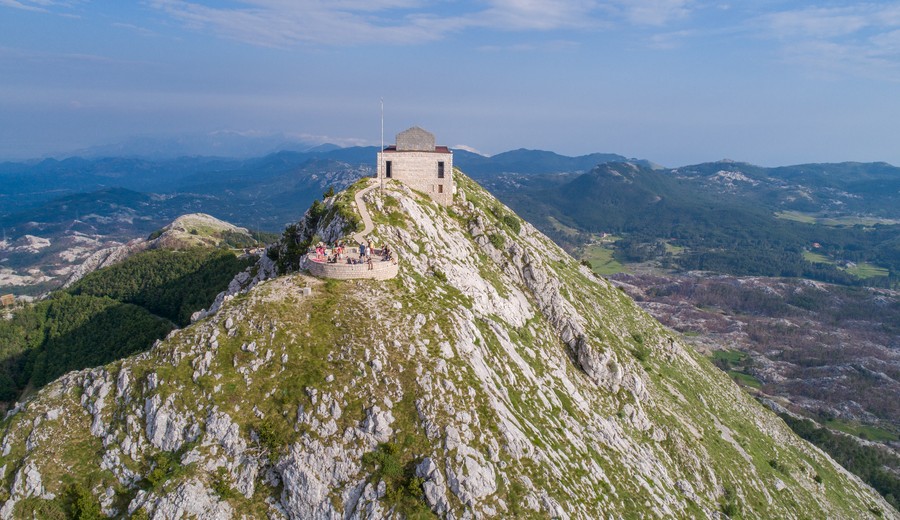
At the very heart of Lovćen’s meaning stands Njegoš Mausoleum, resting high above the clouds. This monumental site is dedicated to Petar II Petrović Njegoš — poet, philosopher, and ruler — whose legacy is inseparable from Montenegro itself.
The climb to the mausoleum is both physical and symbolic. Step by step, the landscape opens wider, until the view stretches across mountains, sea, and sky. It is a place of reflection rather than spectacle, where visitors come not only for the panorama, but for the feeling of standing at Montenegro’s spiritual summit.
Nature, Silence, and Slow Exploration
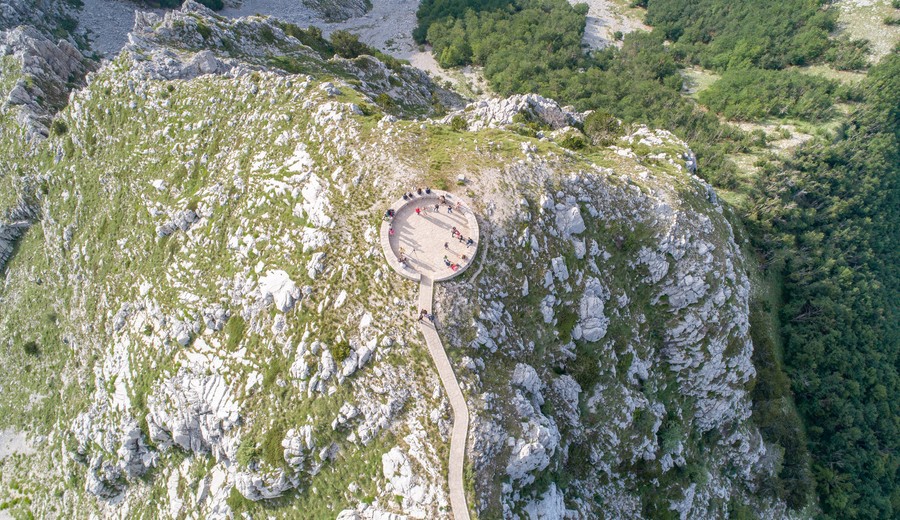
Lovćen National Park invites a slower kind of discovery. Walking trails wind through forests and open fields, offering moments of silence broken only by wind and birdsong. Viewpoints appear unexpectedly, revealing layers of mountains and valleys shaped over millennia.
Unlike busier parks, Lovćen retains a sense of space and intimacy. It is a place where you can stop without an agenda, sit on a stone wall, and simply look — a rare luxury in modern travel.
Villages, Traditions, and Living Heritage
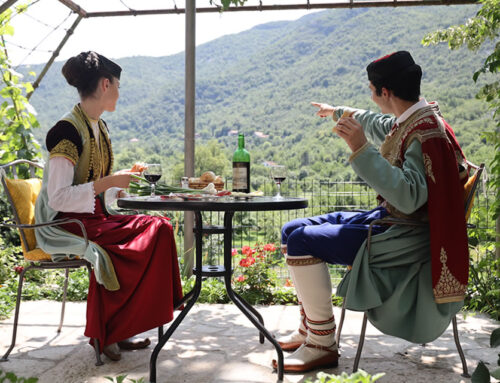
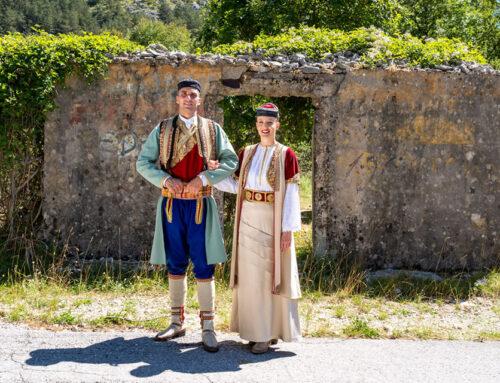
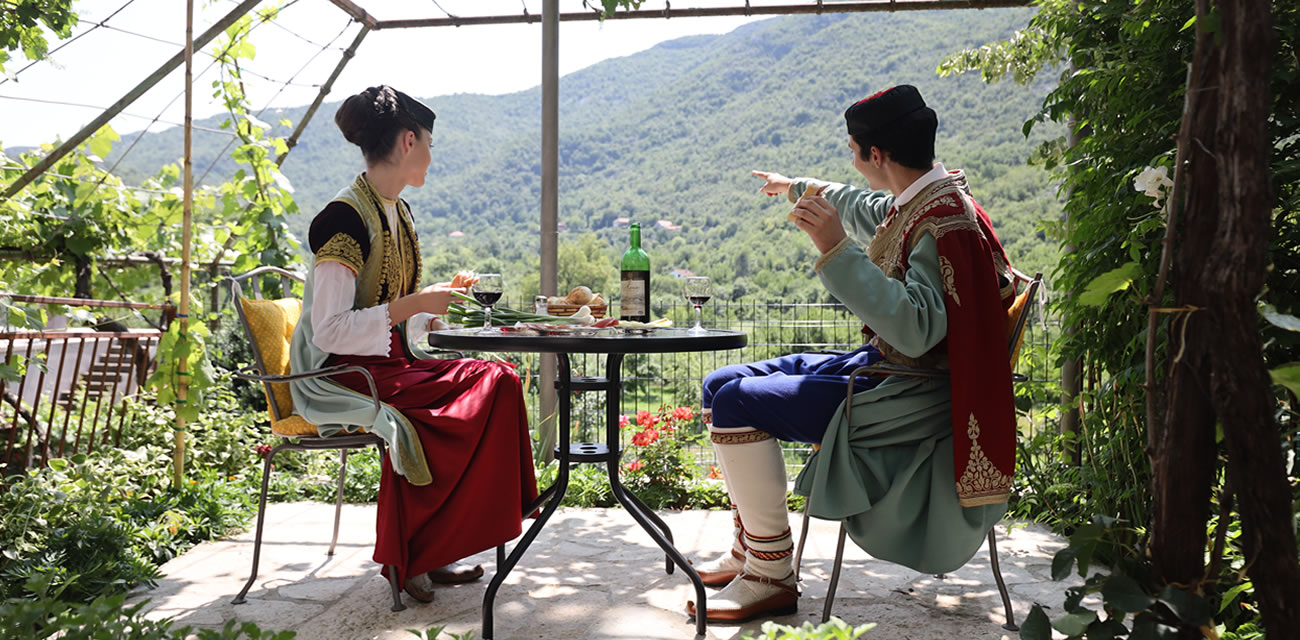
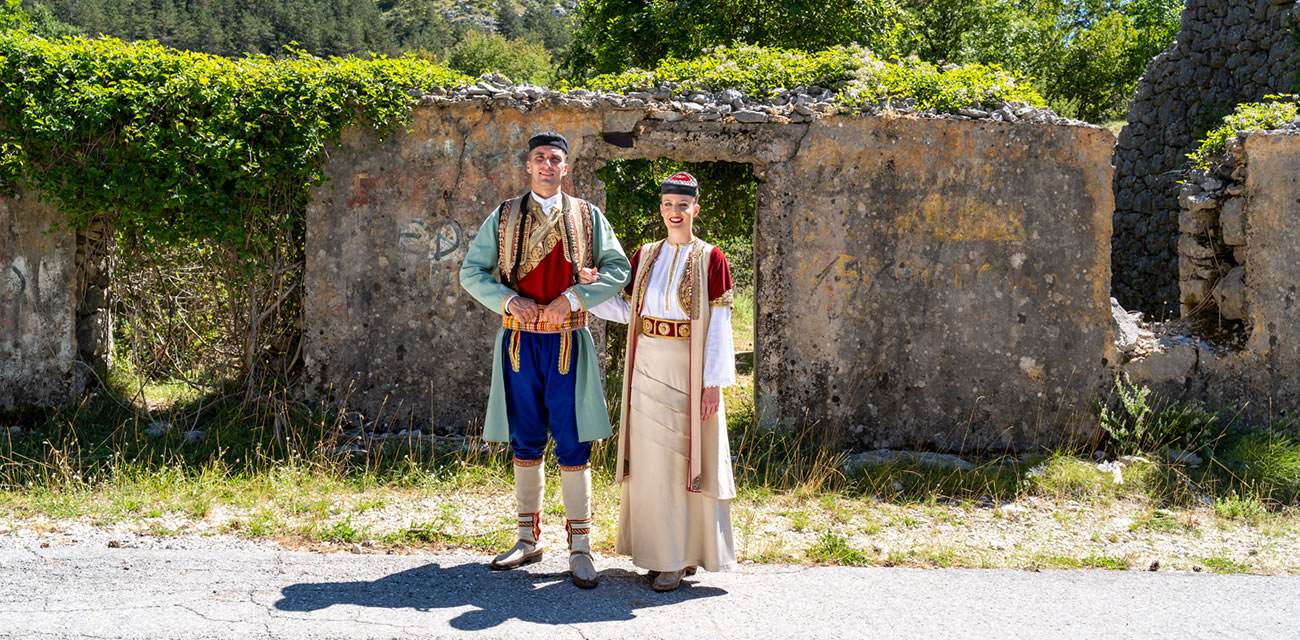
Within and around the park lie villages such as Njeguši, where traditional stone houses, smokehouses, and family farms preserve ways of life passed down for generations. Local prosciutto, cheese, and simple mountain cuisine are not products of tourism, but of climate, geography, and patience.
Lovćen is not a museum of nature — it is a living landscape where people and environment still coexist in balance.
Why Lovćen Matters
To understand Montenegro, one must understand Lovćen. It explains the country’s character: resilient yet open, proud yet quiet, shaped by nature and history in equal measures. This mountain is not just a destination, but a reference point — a place Montenegrins return to, physically or in memory.
Whether approached from the coast, from Cetinje, or from the heights above Kotor, Lovćen does not demand attention. It earns it — slowly, honestly, and forever.
Lovćen is where Montenegro begins, and where it continues to make sense.